But this isn’t just happening at a startup scale…
large public companies are Adopting PLG, too:
Twenty. Twenty-one

Product-led growth is top trend in 2021, but we're seeing a shocking amount of folks adopt in on their company's exterior without making the necessary changes internally. Are you a product imposter? Find out by comparing yourself to 250+ companies in CleanView’s 2021 Product Benchmarks report.
See if you're an imposter. and get the full report.

We put the newest data under the magnifying glass and found some clues for you:
Ready to find out where Your organization excels? Dive on in.




Enabling the adoption of product-led best practices by providing benchmarks to product-minded founders and operators.
The events of 2020 and the shift to remote work has shown founders and operators the importance of being able to shift quickly. As the product itself becomes a growth lever for your business, the SaaS metric playbook is rapidly changing. Our benchmarks, segmented by company size and market, give you the objective data you need to make those key decisions for your team and your company.
CleanView’s 2021 Product Benchmarks report was written, analyzed, and compiled by:


Our base of responses grew 70%over last year.

Facts about respondents:

Growth Rate
ARR
Compary Size
FTEs at the end of 2020
Product Types
Most Common
Respondants
Job Title
CleanView is all-in on product-led growth. These models begin with addressing end-user frustrations and providing value before a paywall (think Calendly, Expensify, and DataDog), but also have sophisticated revenue operations requirements on the back-end that differ from the way that software products have been sold in the past.
COVID-19 forced SaaS companies to rethink their approach to growth, and many of them decided to introduce product-led tactics like free products or free trials.
Growth Rate
2020 Free/Trial
2021 Free/Trial
| Low | 41% | 44% |
| High | 49% | 49% |
But this isn’t just happening at a startup scale…
large public companies are Adopting PLG, too:


"Product leads who are talking a product-led approach-measuring usage, experimenting with new ideas and providing value for their users at low to no cost-end up building high-growth, enduring business."
Jason Williams,
CEO of The Abigali Company


PLG adoption is certainly growing at the surface level, but when you dig a bit deeper, the operational requirements aren’t there yet.
Free products aren’t just set-it-and forget it. To support them, you need a whole new toolset of SaaS metricsto help your team navigate the new user journey. Many of these new metrics measure the efficiency of your product as an acquisition tool. To understand how quickly your audiences are finding value in your product, we recommend measuring activation.
Activation is not “new” per se, but it’s finally getting the attention it deserves. Activation is the percentage of users that reach a specific “aha” moment in your product. That aha moment should be:
The metrics that don’t quite meet the activation standard, but have some correlation with business success should be leveraged as Product-Qualified Leads—PQLs for short.
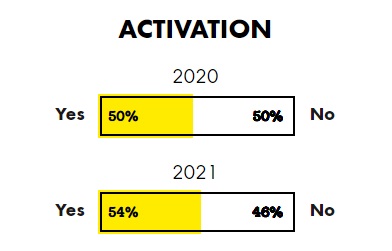
Businesses aren’t using Activation and PQLs as a KPI any more than last year
Yikes!
Not much movement for these metrics.


Developers are a tough crowd. To capture their attention and provide them with value, developer-focused companies have learned that you have to do this quickly, with open, free models. In the past year, we’ve seen a dramatic increase of freemium and free trial adoption.
Developer focused models are considerably more likely to take a free-offering approach than other B2B offerings

Since Product-Led growth is still a very new frontier for B2B SaaS, companies are still experimenting with how the teams created to support free products look. As a result, Growth teams have shifted from being subsidiaries of sales or marketing and are reporting more to Product or directly to the CEO. As more and more companies see the value in hiring these experts, the talent pool is growing increasingly thin.
Growth teams are rapidly moving away from reporting into Sales and Marketing and into the Chief Executive, instead.
When the product itself becomes an acquisition machine, marketing is still desperately needed, just at different parts of the customer journey.
Think of traditional SaaS models as front-loading commercial activities, and product-led teams as placing those resources during strategic discovery moments as users unlock value in the product itself.
User acquisition comes from very different places for product-led companies.
PLG
NON-PLG
As organic traffic becomes front-and center, marketing is tasked with finding scalable ways to build brand awareness. Snyk, for example, does this with programmatic SEO. As PLG becomes more mature I expect we’ll see marketing flexing their creative muscles to competitively capture our attention.
Say it with me: Product-led doesn’t mean no-sales.
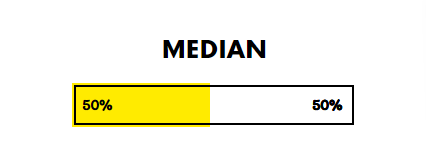
Self-service conversion is the dream right? Build a great product, and people will discover it organically, fall in love with it, and buy it. Well, for most, self-service conversion is in hatchthe minority. About half of all conversions were self-serve, according to respondents.
Product-led means you can expect sales to engage with users further down the funnel, after they’ve gotten the opportunity to try the product and have questions about their specific use-case.
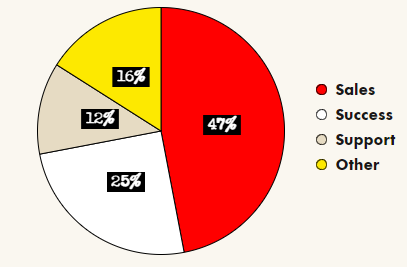
Sales is most likely performing the initial outreach to engage with free users
Feel overwhelming for the team? Download our full report to better understand the tools that Growth pros use to automate this outreach and qualify free users.